Summer Music Clinic elective classes offer diverse music education
Global drumming. Latin dance. Afro-Cuban jazz. These may not sound like your student’s typical summer camp classes, but at Summer Music Clinic, elective classes like these make up an important part of a diverse learning experience.
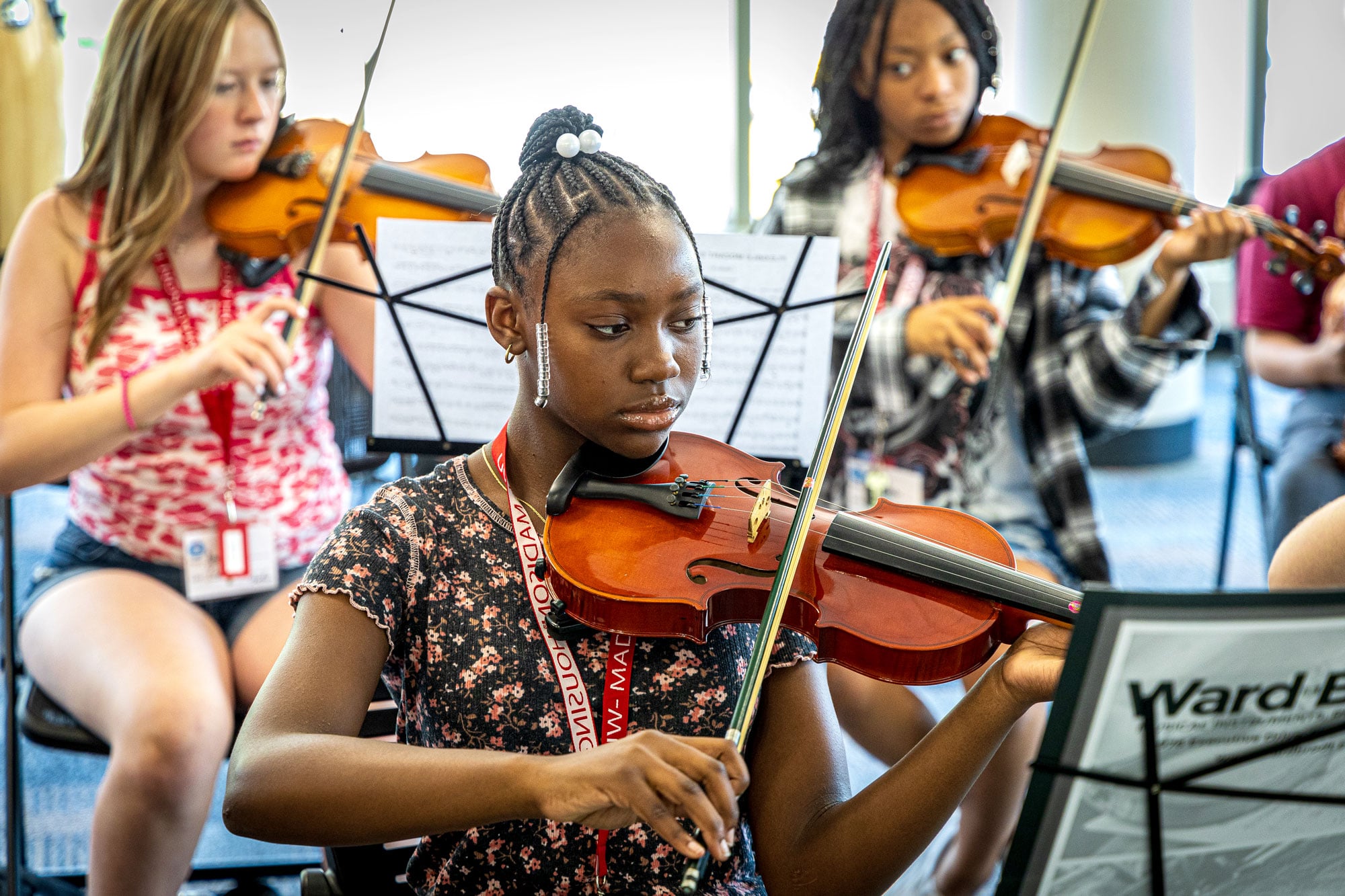
For more than 90 years, the University of Wisconsin–Madison’s Summer Music Clinic has offered students completing grades 6-12 a unique opportunity to enhance their skills in band, choir, jazz, orchestra, musical theater, or general music (which requires no previous music experience). Working with skilled music educators, students spend several hours a day in small groups and larger ensembles, rehearsing their chosen area of study.
“Summer Music Clinic is a special place because it brings students together from different musical backgrounds, cultural experiences and individual passions,” says Badger Precollege Director Olha Skyba. “The common thread is that they share an interest in learning about and making music. They leave the program with lifelong friendships, a better understanding of who they are and how their music can impact the world around them.”
Engaging electives
A wide-ranging selection of elective classes furthers opportunities for students to expand their musical horizons. With topics ranging from Brazilian percussion and string chamber music to digital audio recording and musical improvisation, these classes help round out each student’s experience.
“Elective classes are designed to open students’ minds to music, sounds and artists they don’t already know,” says Summer Music Clinic Program Director Carrie Backman. “They also give students the tools and resources to continue exploring these topics on their own. For some students, these classes can open the door to a new skill or lifelong passion.”
Here’s a sample of elective classes available:
- Audition Crushing – Do you audition for honors ensembles, solos, theater productions, college and more? Are you looking to gain valuable experience and tips for how to prepare for and crush your audition in the moment? This course is for you! Come with pieces of music you have prepared to gain valuable experience and insight into the audition processes in music.
- Brazilian Percussion – An exploration of the array of drums and drumming styles from Brazil, including the Samba from Rio de Janeiro’s Carnival parades.
- Latin Dance – Focusing on partner dances, where two or more pairs dance together in a circle, this class explores the rich influences of Afro-Cuban folkloric and Cuban popular rhythm, culture and movement.
- Music AND – Are you curious about how seemingly opposite fields can merge into something groundbreaking? Are you passionate about music and want to see how it intersects with other areas? This course explores the surprising connections between music AND … technology/artificial intelligence, health, history and current events. Discover the innovative ways these fields come together!
- History of Hip-Hop – Learn about the key cultural events, people and politics that shaped Hip-Hop over the years and where it is today.
- World Music – Study music in different national and cultural contexts, such as the vocal techniques in the Arab world, ensembles like the Gamelan in Indonesia, brass bands in Africa, Karaoke and K-Pop in East Asia, and folk music as protest in Latin America.
A grand finale among friends
Along with intensive study, Summer Music Clinic allows plenty of time for socializing with creative indoor and outdoor activities. Evenings include concerts performed by guest artists, faculty members, and fellow students. Everyone’s hard work is shared and celebrated at the end of the week with concerts for family and friends.
Learn more about how to register for Summer Music Clinic. A limited number of full and partial scholarships are granted, based on financial need. The Junior Session is available for students completing grades 6-8 takes, and the Senior Session is available for students completing grades 9-12.
This article has been updated from the original published on February 25, 2020, to reflect new information.