

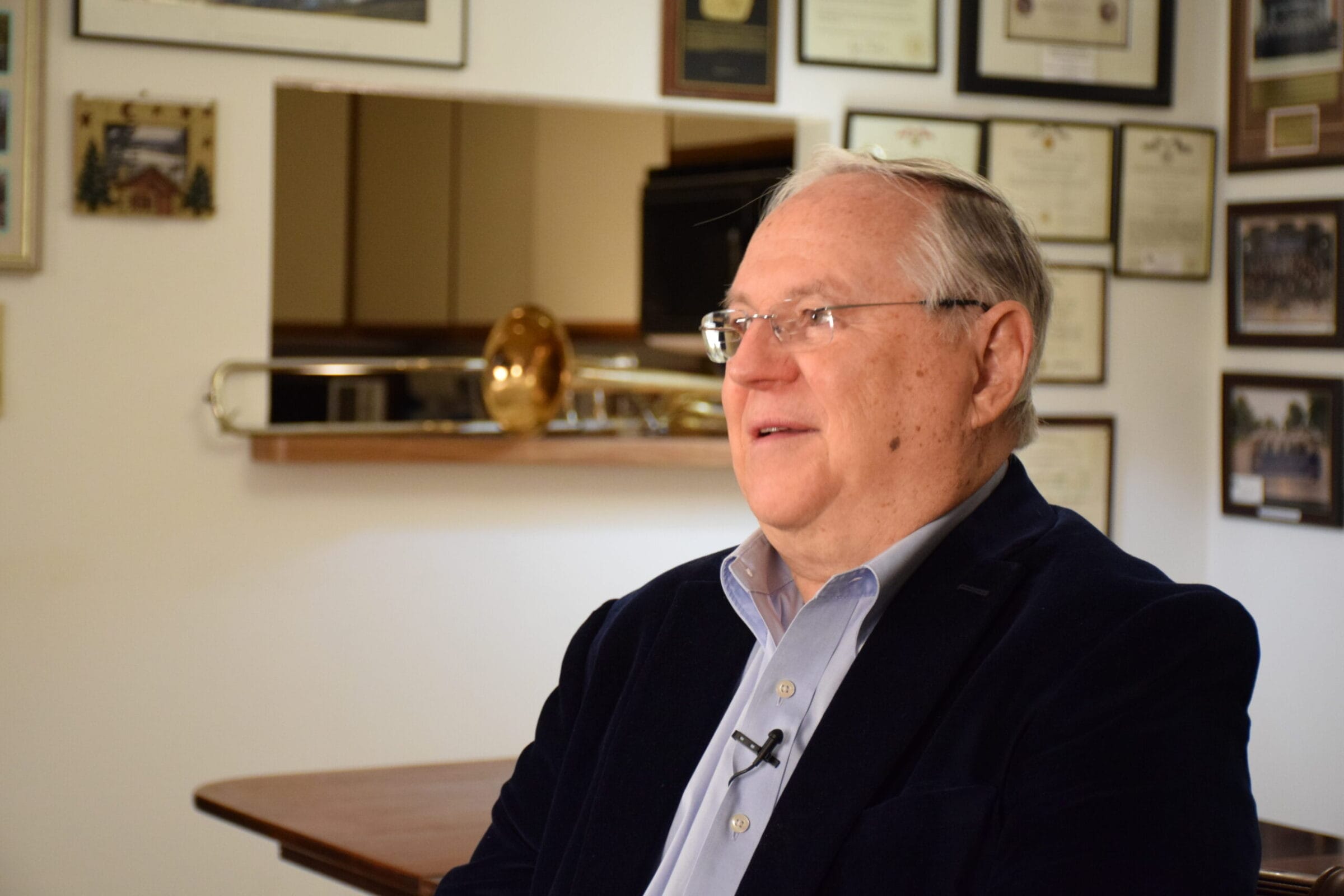
Summer Music Clinic success story: Trombonist Bill Richardson’s legacy of performing and teaching
When Bill Richardson picked up his grandfather’s trombone for the first time in 1951, he didn’t realize that it would lead him into a lifetime of music. From the Badger State to the White House and back again, Richardson’s career has embodied the Wisconsin Idea.
It all started with the opportunity to attend UW–Madison’s Summer Music Clinic (SMC) on a scholarship. Since 1929, SMC has offered a weeklong music experience on campus to generations of young, aspiring musicians. For Richardson, SMC ignited a lifelong career and passion for the performing arts — and sharing that passion.
A transformative music experience
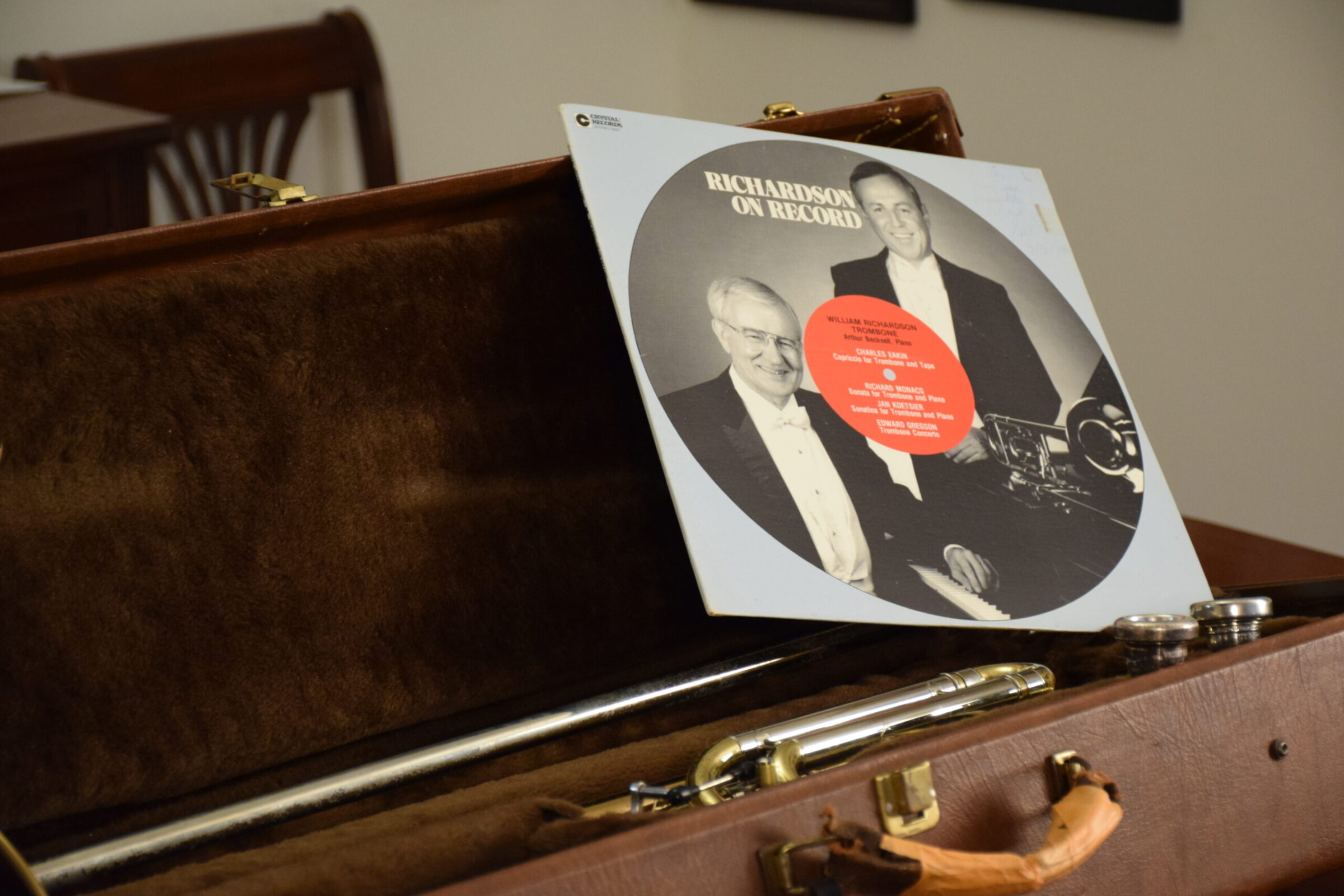
One of Bill Richardson’s recordings
The Richardson family’s musical history has deep roots. Bill’s grandfather, Fred Wells, was a trombone player for the Baraboo Home Guard, famous for “chasing Pancho Villa” along the Mexican border in 1917. His mother, Eleanor Wells, was a pianist and trombonist, just like his father. His uncle played alongside the famous Tommy Dorsey during World War II. Even his older brother, Brian, was a trombonist.
“In our family, music wasn’t just a pastime. It was part of who we were,” Richardson said.
A sense of heritage inspired Richardson to start his own journey. In 1958, his high school band director, Bob White, encouraged him to apply for UW–Madison’s Summer Music Clinic. He received a partial scholarship to attend the campus event. Nervous but eager, Richardson traveled from his small town of Hillsboro, Wisconsin, and arrived in Madison, surrounded by students and teachers from across the nation.
“I remember feeling out of my league,” he said, “but that week taught me discipline, how to practice and how to listen. Conquering these three habits can turn you from a kid who plays an instrument into a musician.”
Feeling he had found his calling, Richardson returned to SMC on a choral scholarship two years later. This time, he auditioned for the four-year tuition waiver award to attend UW–Madison. At the program’s closing concert, Richardson was called up on stage to receive one of the awards.
“None of my life’s pathways would have transpired if I had not won that SMC scholarship,” he said. “That moment changed everything.”
A career worthy of a standing ovation
In 1964, Richardson earned his Bachelor of Music Education at UW–Madison. The following year, he earned his master’s in trombone performance. During his time as a Badger, he performed with the Madison Symphony Orchestra and various dance bands and orchestra pit ensembles.
Soon enough, Richardson’s talent and experience landed him a spot in the St. Louis Symphony, fulfilling a lifelong dream of playing in an orchestra. However, the Vietnam War was also brewing. Richardson tried out for several U.S. military bands, landing a position with “The President’s Own” U.S. Marine Band in D.C. and performing at White House events from 1966 to 1970 for Presidents Lyndon B. Johnson and Richard Nixon. He also performed in concert and jazz bands, parades at the Marine Barracks, funerals at Arlington National Cemetery and a 6-week tour across the country.
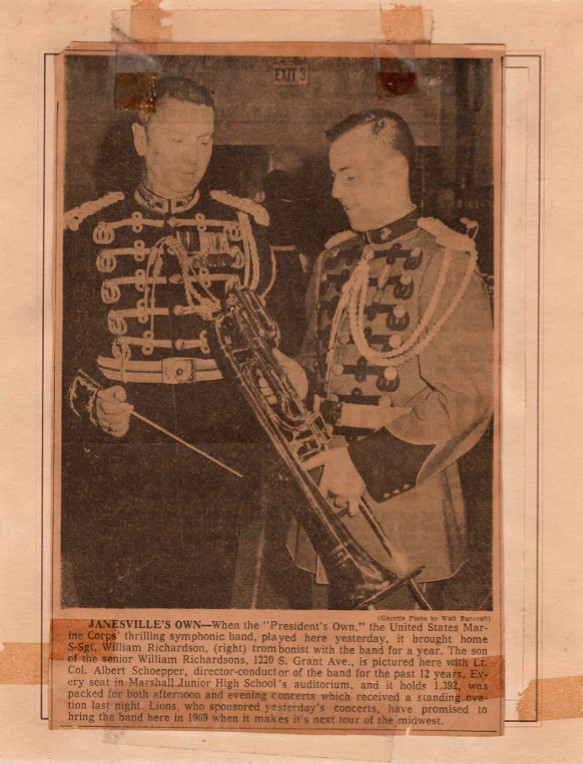
Bill Richardson in the The President’s Own Marine Band, on right
His most memorable performance was for astronauts Neil Armstrong and Buzz Aldrin after their return from the moon. But to this day, Richardson said the funerals at Arlington for fallen Marines were the most moving and meaningful experiences.
“My Marine Band years taught me that music could do more than entertain,” he said. “It could comfort, unite and express things words couldn’t.”
Through the GI Bill, Richardson earned his Doctor of Musical Arts from Catholic University. That launched his academic career and an opportunity to share his talents with aspiring young musicians. He started teaching at the University of Colorado-Boulder, helping to found the Colorado Brass Quintet.
In 1974, Richardson returned to his alma mater as a professor of trombone and a member of the Wisconsin Brass Quintet (WBQ). He taught music education students how to play the trombone and teach others to do so. For several years he also taught an American Musical Theatre 1900-1960 course.
Through the WBQ, he combined his expertise and experience to entertain communities throughout the state and beyond its borders, embodying the Wisconsin Idea.
In 1977 Richardson joined the 132nd Army Band of the Wisconsin National Guard as a leader of the ensemble for more than 26 years. The band performed in parades, concerts, governors’ inaugurations, a recreation tour of WWII 32nd Band tour in Australia 50 years later, as well as the sending off and homecomings of thousands of Guard troops during the Middle East wars.
“Music has a way of healing people,” he said. “You could see it in the soldiers’ faces. That sense of relief, pride and homecoming.”
Continuing a musical legacy
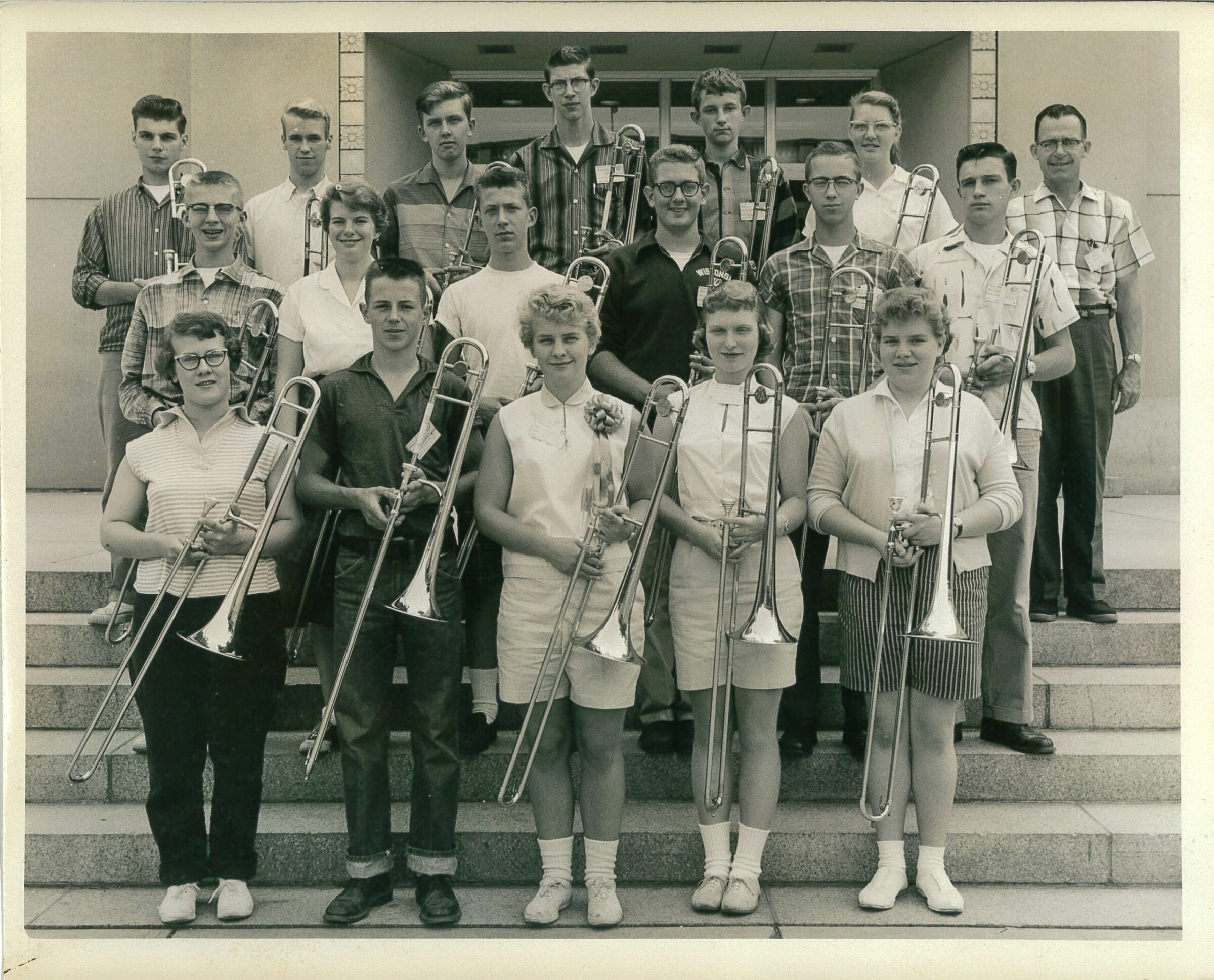
Bill Richardson at Summer Music Clinic, first row, second from left
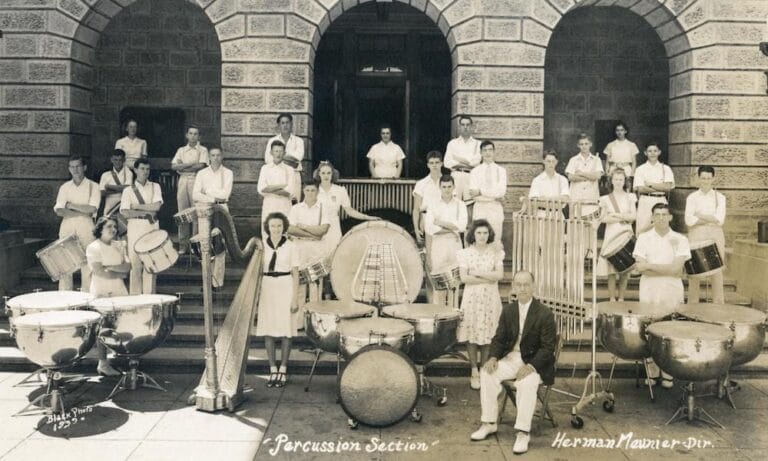
After decades of performing and teaching, Richardson returned to where it all began: Summer Music Clinic, where he frequently taught and performed. Richardson was eager to inspire young musicians just as he had been inspired as a rising musician.
He also donated his professional instruments and music library to SMC as a way of passing the torch. For Richardson, SMC was a life-changing opportunity. His early SMC scholarship opened a door to higher education and launched a lifetime of creativity, service and teaching.
Today, the Summer Music Clinic Tuition Waiver continues to help young musicians and students pursue their dreams, awarding 10 students annually with four years of tuition-free undergraduate music education.
“Every summer, there’s another student who’s sitting where I once sat,” he said. “Maybe they don’t know it yet, but this could be where their story begins, too.”
Richardson’s advice to students? Practice hard, surround yourself with people who challenge you and find joy in making music with others. Those simple guidelines resonate across many generations of Wisconsin musicians.
Looking back on his journey, it’s obvious Richardson experienced a full-circle composition. Starting as a young boy, inspired by his family’s heritage, and ending up a well-decorated musician and teacher, every note he played harks back to his first summer at Summer Music Clinic.
For more information, visit the Summer Music Clinic website. Learn more about the history of continuing education at UW–Madison by reading our history blog, which celebrates more than 30 years of the Division of Continuing Studies and more than 130 years of continuing education at the University of Wisconsin–Madison.

Post written by Jakob Moe.

Published on Dec 12 2025
Last Updated on Mar 23 2026
Categories: Badger Precollege, News
Tags: history project